Huigen’s Vibrant Illustrations.
Who is Micha Huigen?
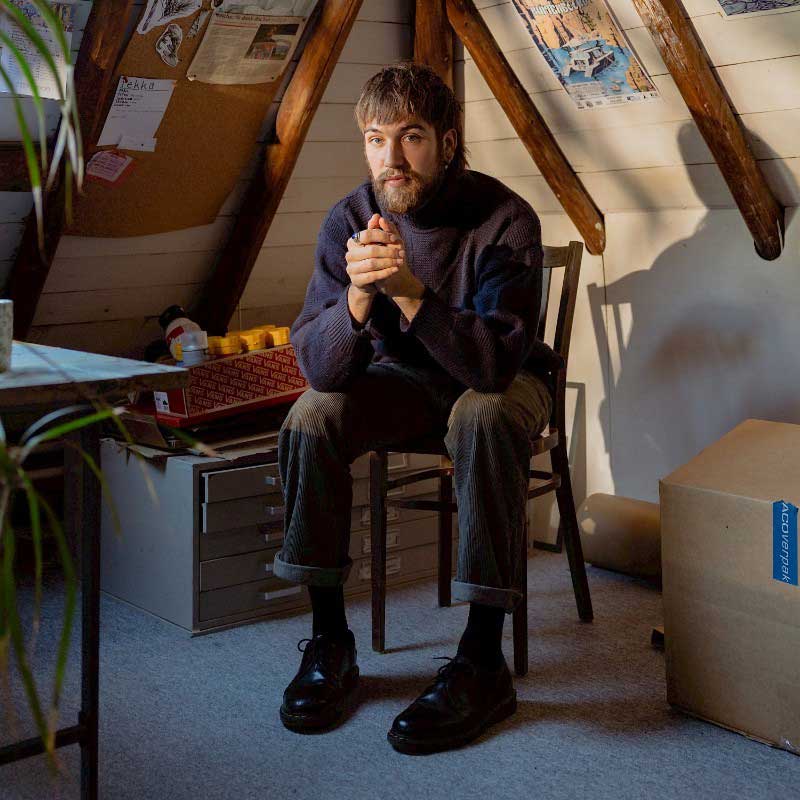
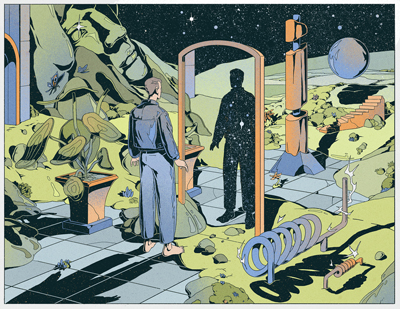
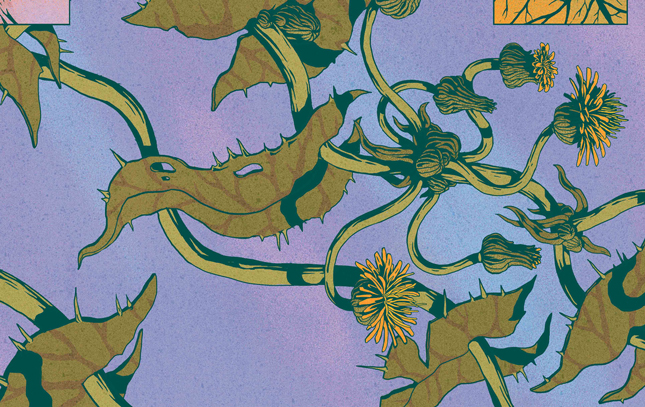
Micha Huigen is an illustrator currently based in Zwolle, the Netherlands. Dissecting and reassembling everyday objects into surreal machines, the artist’s style is marked by bold and elegant line work. Huigen has had several solo exhibitions and crafted artwork for album covers, music videos, magazines, and editorial publications. “I want my illustrations to make people look beyond what is usually perceived as mundane and ordinary. I want to challenge them to use their imagination. Even though I do work with certain themes and ideas in mind, my work allows the onlooker to dive into my works and create their reality,” he says.
The illustrator creates dynamic and detailed works where stories are hidden behind every corner”
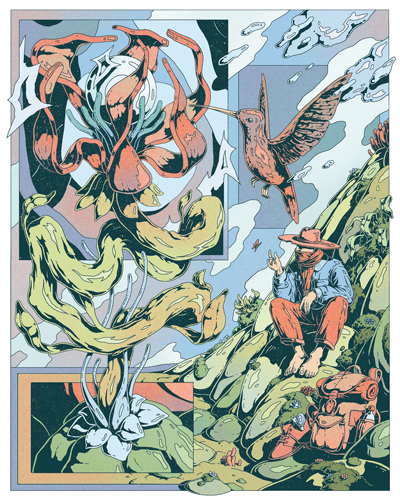
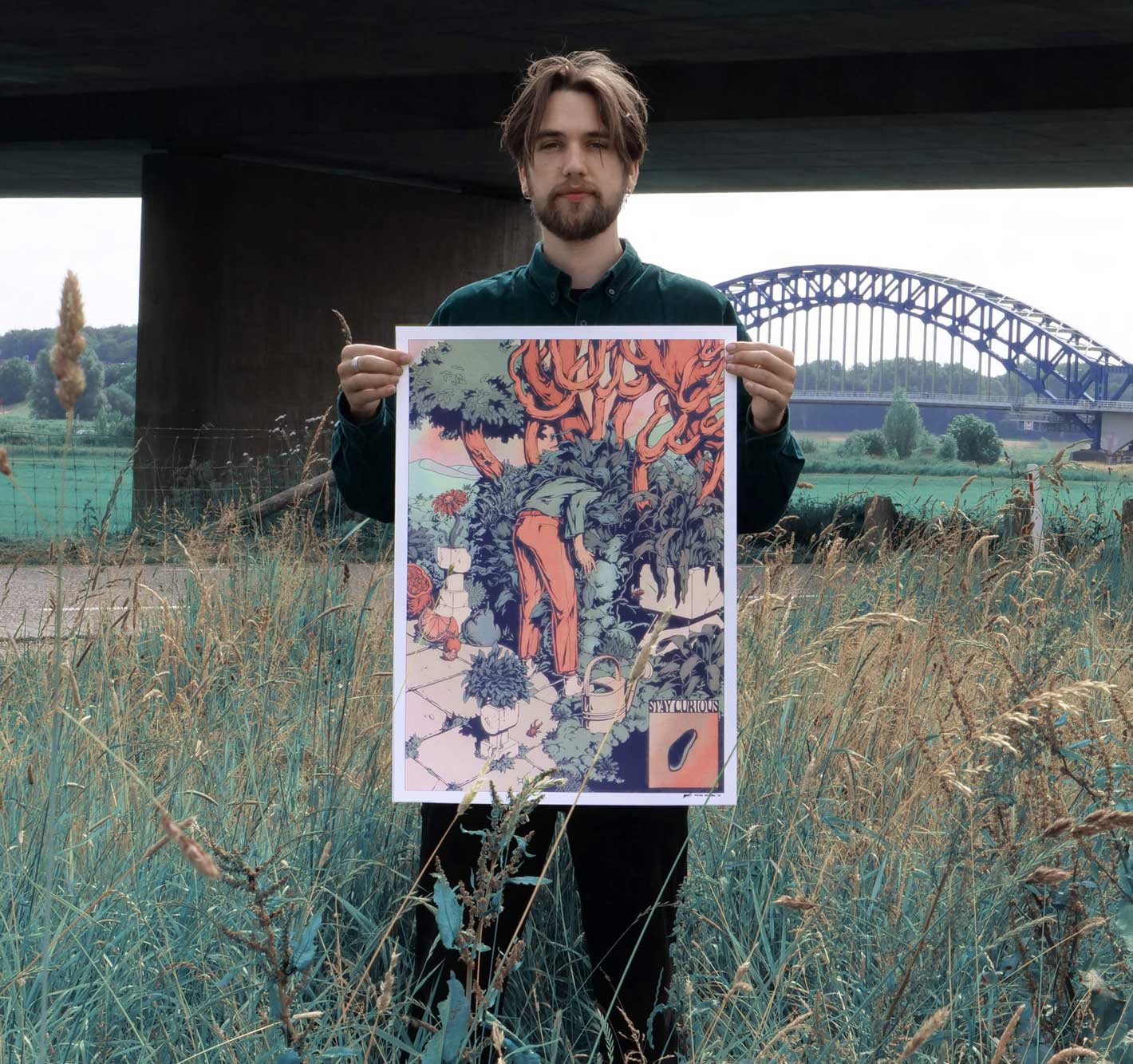
One glance isn’t enough to fully enjoy the work of illustrator Micha Huigen. The immersive art style of the Netherlands-based artist is crafted in such a way that invites viewers on a (possibly endless) visual journey. Evoking all the best parts of vintage graphic novel art and psychedelic colour palettes, Micha wants his viewers to “wander around in the works”, as he tells us. “It’s very important for people to stay curious,” he adds. Taking influence from the likes of James Jean and Pat Perry, Micha wishes to focus on the “state of wonder” that can spark positivity as we navigate the world.
That’s exactly the essence of Micha’s work, as dynamic and whimsical stories spring out from every corner of his illustrations. In one image, there’s a plant growing in a place you wouldn’t expect it to, and then another reveals an interesting shadow play around human figures. Additionally, while these works have all the aesthetic cues of something artisanal, they’re mostly rendered digitally. “I create visual stories while always trying to find a good balance between detail and legibility,” he says.
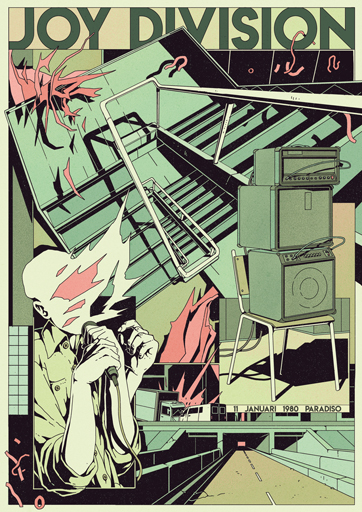
As an accomplished illustrator with a clear point of view, there’s no wondering why Micha’s work has been tapped for various album covers, posters and editorial features in the likes of Washington Post and Vice.
Q & A
How do you make your illustrations?
I used to always do the sketching and the linework on paper, then scan the linework and color it digitally. But I recently bought myself a drawing tablet with a screen, which makes working digitally feel way more natural. Nowadays, I only do the rough sketch on paper, but I wouldn’t be surprised if I’ll be doing that digitally soon as well.
For my personal work, I sometimes like to go fully analog, often with acrylic paint and markers. I like the way digital illustration is so efficient and that there’s an infinite amount of options within reach. That used to be a bit overwhelming, but now it feels like an advantage. I really enjoy the freedom it offers me.
How do you first approach a drawing? How does your process of sketching work — do you start with an idea, or just see what comes out when you sit down to work?
The first thing I do is make a little summary of the article to have an idea of what the subject is and how I can represent it. Then I start thinking about objects that have to be in there and how to make that look interesting, or how I can turn them into more than just a literal depiction of those elements. Take the illustration for the article about electric vehicles, for instance. The main idea of the article is that Tesla batteries died too quickly to be used as racing cars. A battery and an EV were things that, realistically, had to be in the image. So then I started thinking about how I could make those objects speak to the imagination. I started looking up what electric motors and the interior of Tesla’s cars look like. Tesla’s dashboard screens gave me the idea to create a frame with the arms of a race driver holding a steering wheel, going into a frame with a dashboard, and out of that screen comes another frame with an image of a battery that’s nearly empty.
How did you begin your career as an illustrator? Were there any pivotal moments that made you the artist you are?
I have been drawing my whole life. I was that typical dreamy kid who always filled the pages of his notebooks with doodles in class. When I graduated from high school, I went to an art school specifically to become an art teacher. But I was way too young in my mind back then and I didn’t really take it seriously. After half a year there, I quit. The future was not on my mind at all. I spent a while doing side jobs, and finally, I decided to go to ArtEZ to study illustration design. I guess I had to become a bit more mature first.
My attitude completely changed. In the first year, I thought I already knew how to draw and that I already had my own style. I did every assignment and handed it in on time. Never missed a deadline. But in my mind, I did it just to get that paper. But by the end of the second year, I saw my classmates discovering new materials, new styles, and that made me realize that it was stupid not to try and explore new things as well. That’s when I started to figure out what I wanted to say with my illustrations and how to say it.
I graduated with a portfolio of work about urban exploring. I went to abandoned construction sites and demolished restaurants and tried to convey that sense of adventure in my drawings.
After graduating, I had a variety of side jobs. I worked in a factory stacking boxes on assembly lines. Slowly but surely, I started to get more commissions, and about two years ago, I quit my daytime job and tried to make a living out of just illustration. Three months later COVID-19 hit, and a few big commissions got canceled. But luckily the government here in the Netherlands provided a subsidy to freelancers, which allowed me to continue working.
How did your style develop? Has it changed over time?
My style has gone through a few changes over the years. Both in terms of subjects as well as the way I go about an illustration. I used to draw a lot of dusty attics, sheds, rusty factories, industrial areas filled with car tires, wooden pallets, and iron bars. After a while, I wanted to do something different. Then I started getting back into drawing more surreal, psychedelic things, which gives me the opportunity to come up with interesting compositions, switching perspectives and finding solutions to make objects morph into other things.
See more / content via: https://www.michahuigen.com/