Celebrating Female Artists
Outgrowing: Flowers and Female Artists Exhibit
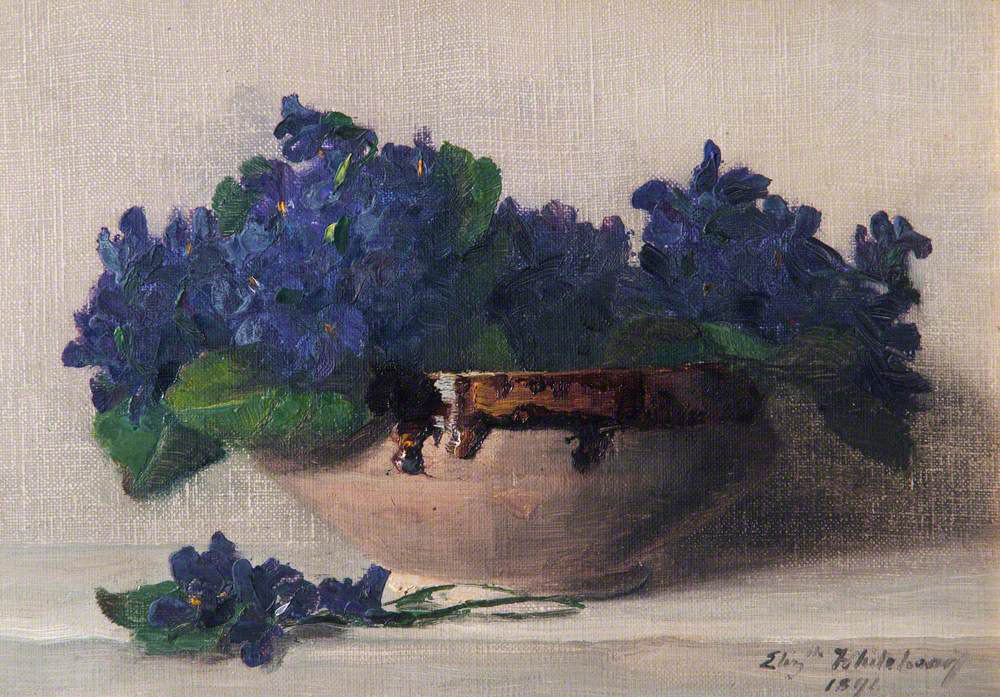
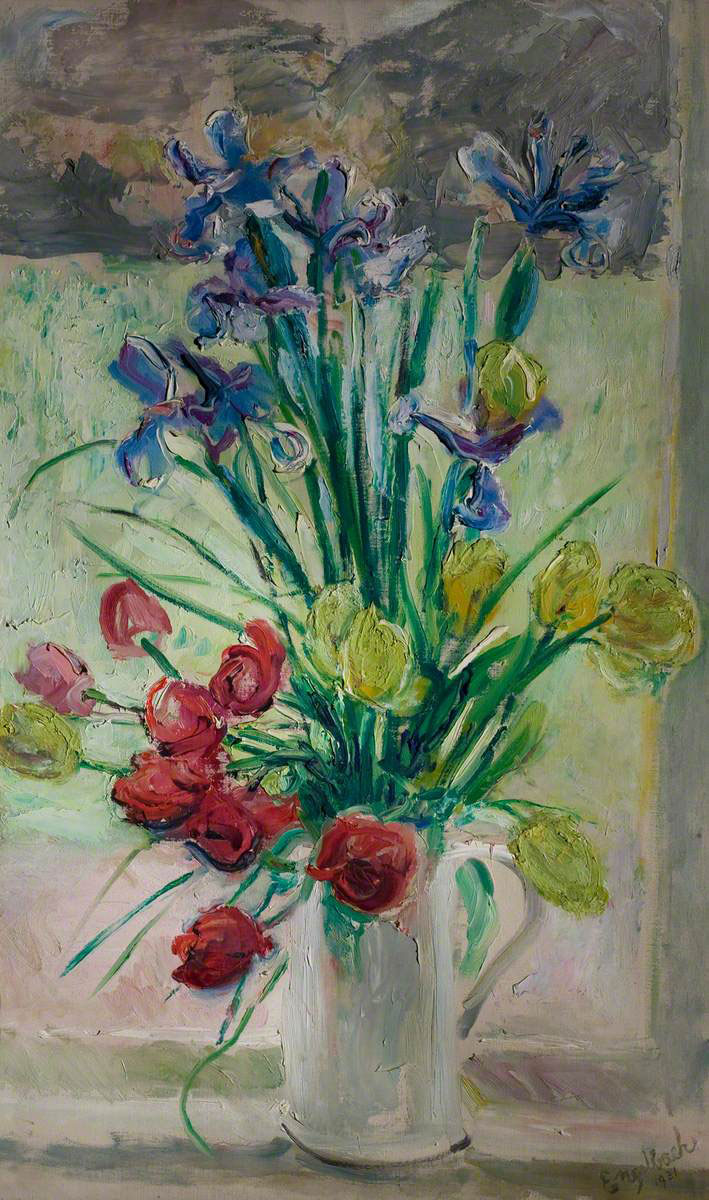
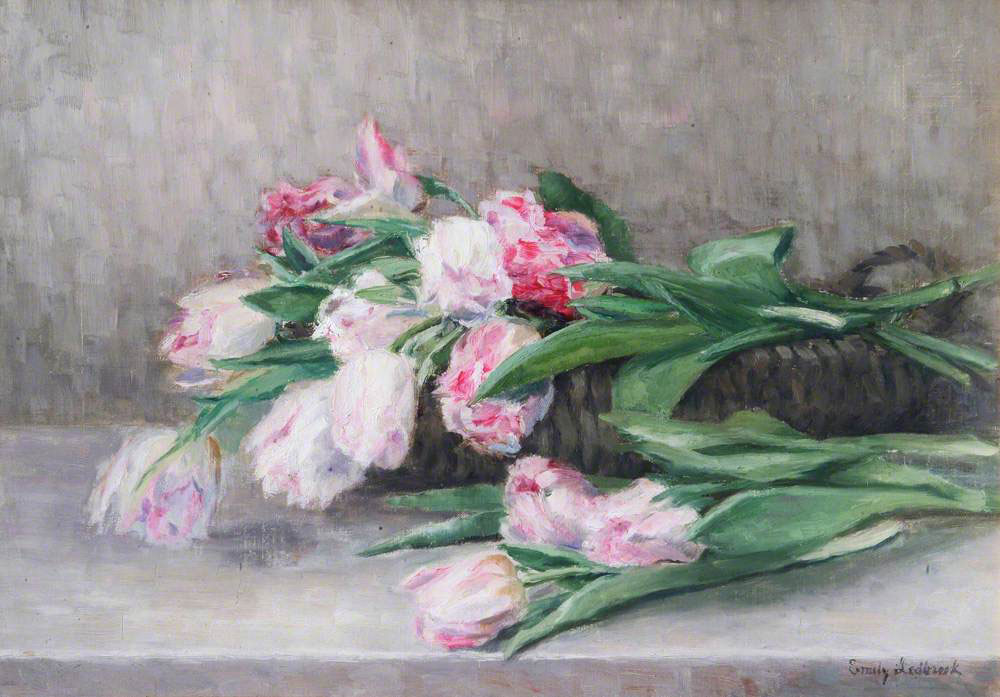
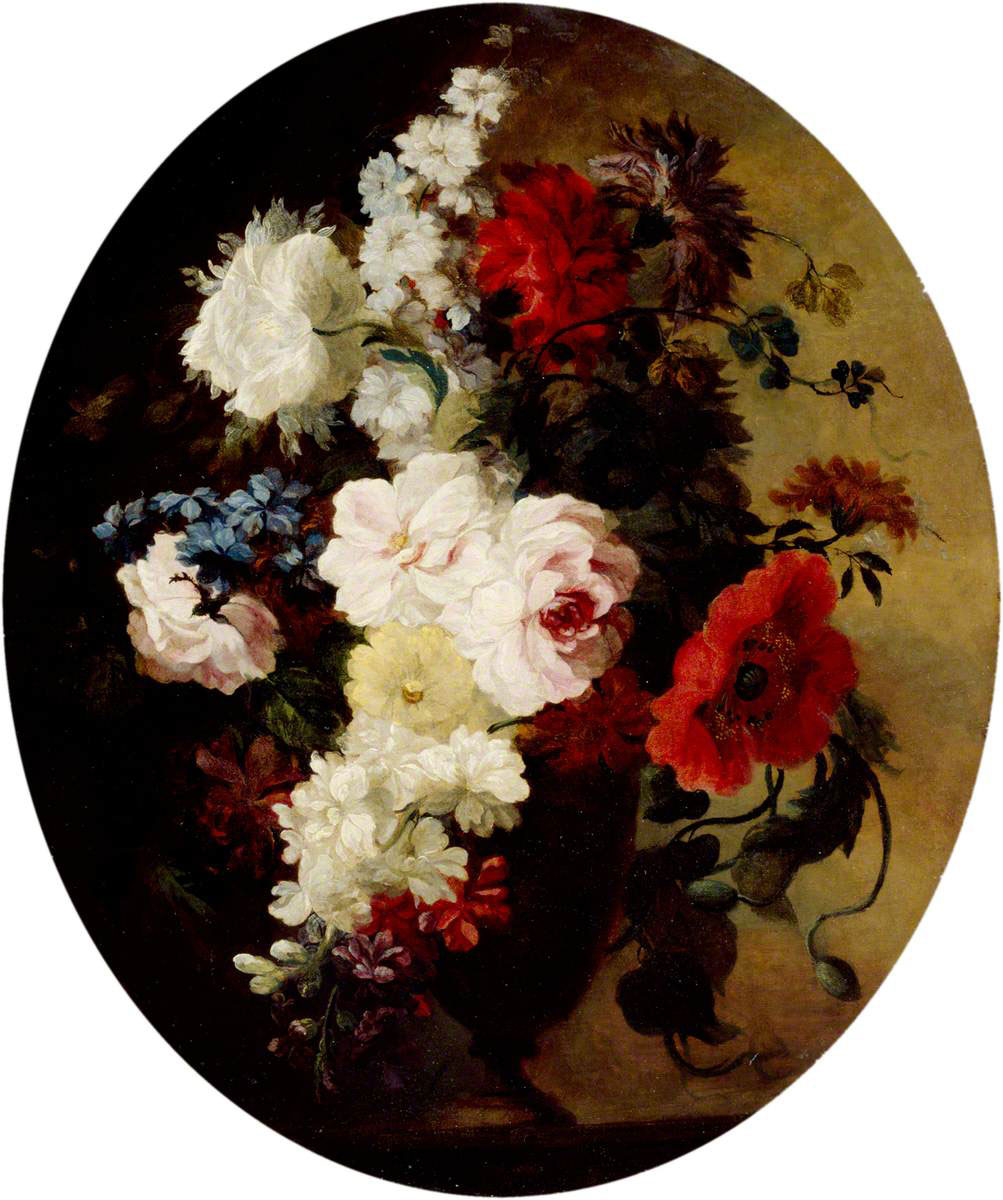
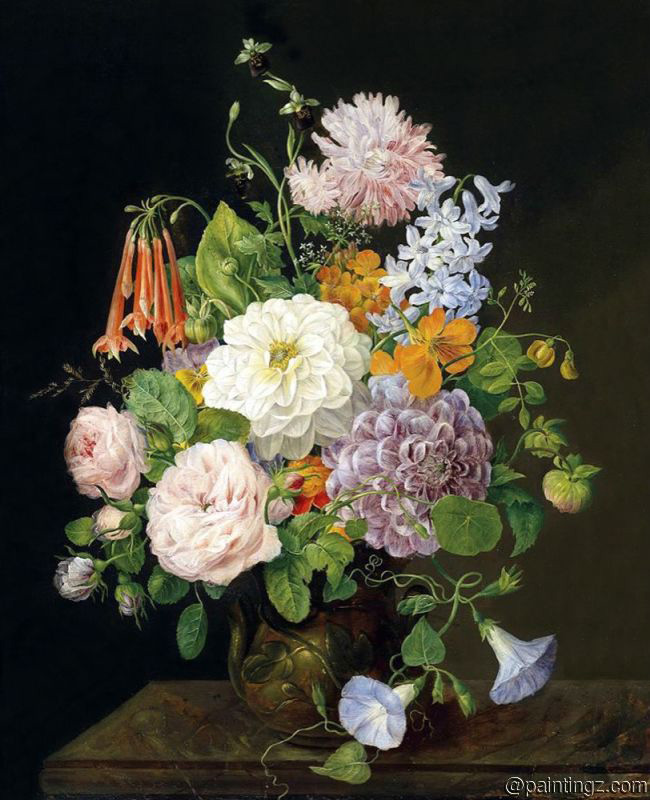
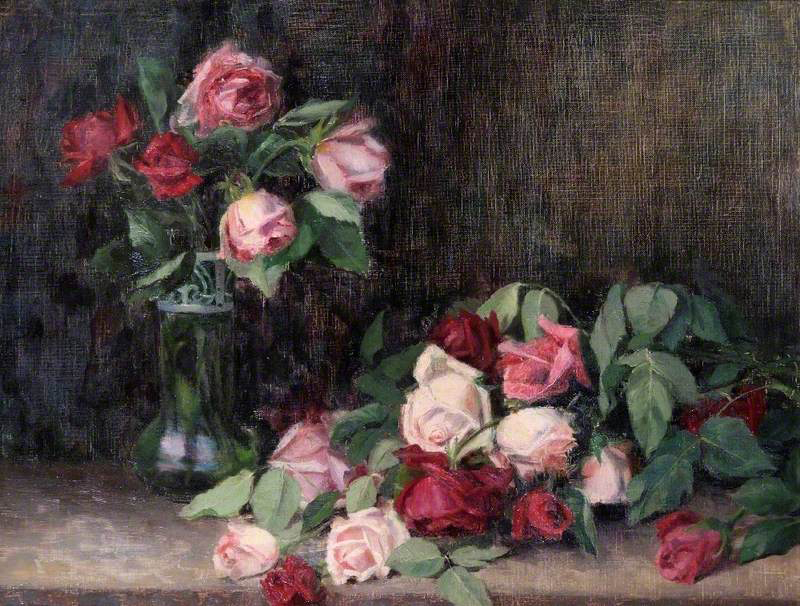
Bunches of tulips lying on a table, a bowl of delicate violets, a green glass vase bursting with colourful, loosely painted peonies. These are the subjects of just some of the paintings by local female artists in the collection at Leamington Spa Art Gallery & Museum and in the museum’s current exhibition ‘Outgrowing: Flowers and female artists, 1700 to Now’ (until 24th April 2022).
The paintings are skilled works of art and reveal a great awareness of the schools of artistic thought that were popular at the turn of the twentieth century in Britain. However, beyond this, we cannot say much about the artists, as there is little biographical information.
Elizabeth Whitehead, Emily Ledbrook and Florence Engelbach are not names that are nationally recognised, although Leamington residents may recognise Whitehead’s name from her blue plaque on Willes Road in the town. We know the dates they were living, that they showed their works at various local galleries and at the Royal Academy, but, like many female artists, beyond this, we have very little historical record.
When thinking about how to exhibit these works, I wanted to find a way to say more about these female artists. Without much information about their lives, I feared they might be passed over as attractive but ultimately decorative artworks.
The relationship between these women and their subject matter, and why they were drawn to paint flowers, seemed to be the perfect way to unlock some of the deeper meaning behind these works. By setting them in a narrative of 300 years of female floral art, we could explore the unique connection women artists have had with this subject as a vehicle of liberation and expression.
History of Flowers, Female Artists, & Femininity
Flowers have often been used as a symbol of femininity, representing the characteristics that have historically been associated with the ‘ideal’ woman, such as naturalness, romance, and beauty. However, it was also these qualities that were used to justify the exclusion of women from professional and intellectual pursuits, including in the arts and sciences, which were considered to be beyond women’s understanding and irrelevant to their domestic role.
For both scientific and artistic purposes, the study of flowers was encouraged as a harmless activity that helped women pass the time, appreciate God’s creation of the natural world, and focus their supposedly innate aptitude for decoration.
During the late seventeenth century and early eighteenth centuries, a fascination for natural philosophy swept across Western Europe. Whilst many avenues of scientific enquiry were closed to women, natural philosophy was seen to be an appropriate pursuit as it encouraged womanly virtues such as sensibility, humility, and piety.
Botany, in particular, was taken up by women of leisure who could grow, study, and depict plants from the comfort of their homes. Botany continued to be a popular pursuit in the Victorian period and the printing of accessible botanical books allowed the study of plants to spread among upper and middle-class women.
Despite society’s expectations, many women made significant contributions to the fields of art and botany, gaining public recognition and professional success. Many women used their skill in this field to gain recognition as botanical illustrators in scientific circles, particularly from institutions such as the Royal Botanical Gardens at Kew.
Botanical study played an important part in the work of many professional female artists, like Mary Moser (1744–1819) and Margaret Meen (1751–1834). Meen worked as a drawing instructor to the daughters of George III and Queen Charlotte as well as publishing Exotic plants from the Royal Botanical Gardens at Kew in 1790.
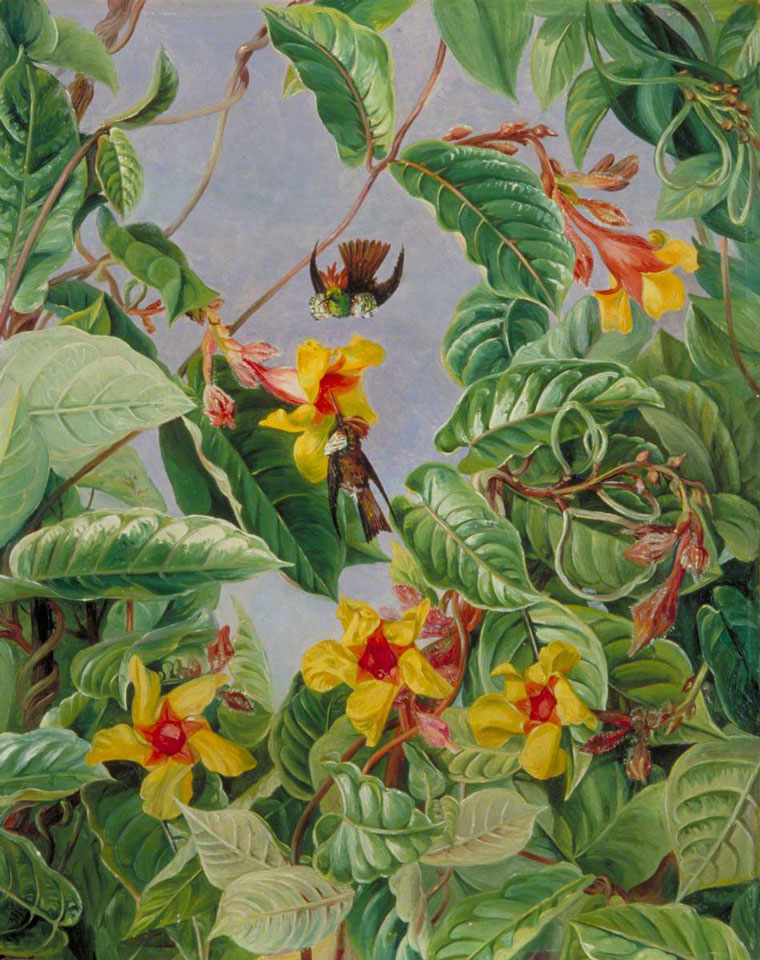
Whilst supposedly a safe subject that could be pursued at home, some women used their botanical studies to break the societal limitations placed on them and travel abroad. Artists such as Maria Sybilla Merian (1647–1717), Marianne North (1830–1890) and Margaret Mee (1909–1988) travelled across the globe to capture and record flora and fauna as far afield as South America, Indonesia and Africa.
Flowers & Beyond
Beyond the world of botany, female artists were still closely bound to the subject of flowers. During the eighteenth and nineteenth centuries, the male art establishment did not consider the majority of women to have the capacity for producing high art, the pinnacle of which was history painting. They did, however, consider women to have the capacity for good taste and thus actively encouraged them to work on decorative subject matter.
The ability to paint and draw flowers was seen to be a positive accomplishment for upper- and middle-class women and an appropriate way for them to pass their leisure hours. Such views were often shared by women themselves, who viewed their work as a pastime not to be publicly exhibited or sold.
Many female artists also turned to the subject of flowers because entrance into art schools was not generally possible for women until the mid-nineteenth century and they were prohibited from learning life drawing. Flowers could be easily observed and depicted at home without the need for specialist training, unlike figure drawing.
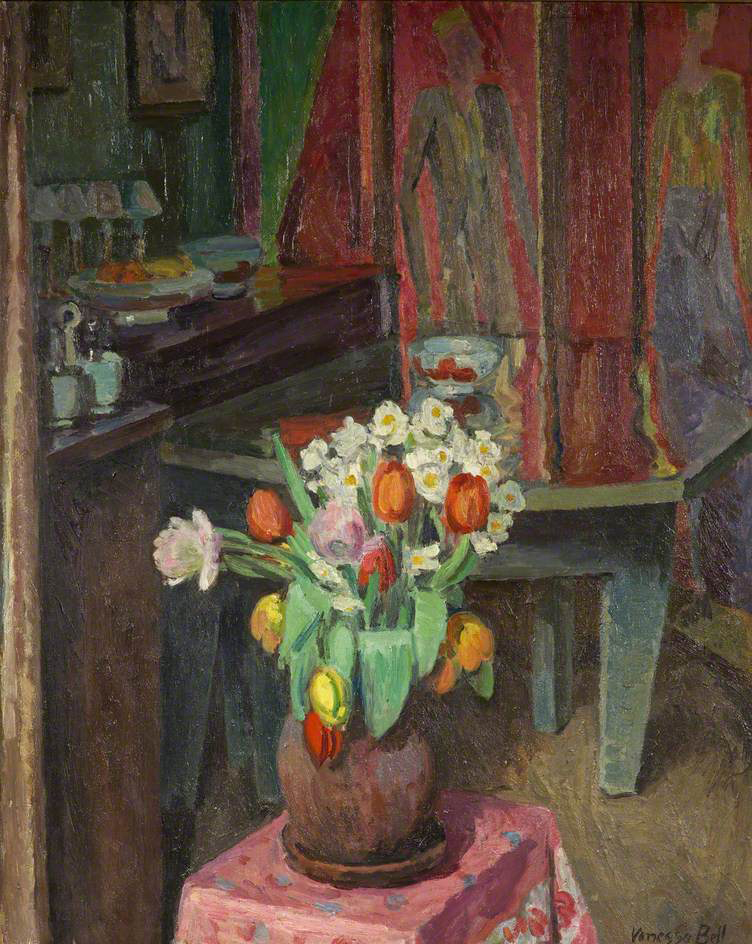
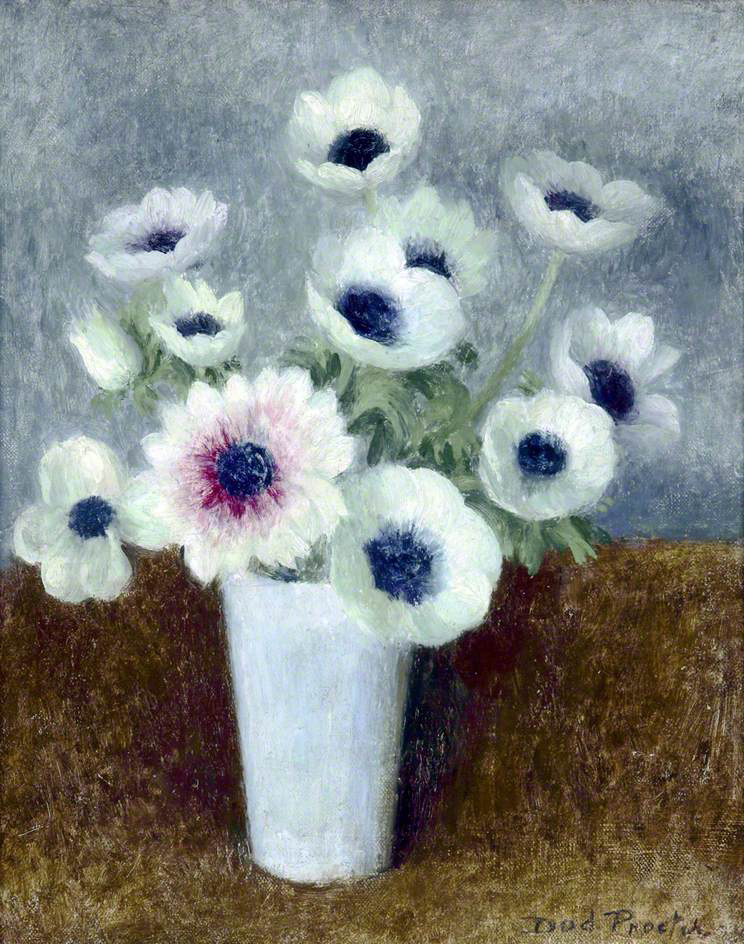
In the twentieth century, the opportunities available to female artists increased dramatically. They were no longer limited to the subject of flowers in their artwork and could freely explore other genres. Despite this freedom, flowers still held a fascination for many modern artists. Artists like Dod Procter and Vanessa Bell saw flowers as encapsulating the colours, forms, patterns, and shapes that were central to modern art.
Flowers continue to inspire many contemporary female artists, through their dynamic colours and forms but also scientifically. Botanical illustration thrives in the modern day and interestingly is still a predominantly female field. Whilst the relationship between female artists and flowers has undoubtedly shifted over time, the long association between femininity and flowers continues.
Whilst many men have painted flowers throughout history, it has not been bound up with their gender. Floral art provides an excellent prism for understanding the experience of female artists over time, showing how women have cultivated their own opportunities, growing, and often outgrowing the limitations placed on them.
See more / content via: https://artuk.org/discover/stories/female-artists-and-flowers