Painting Via the Camera.
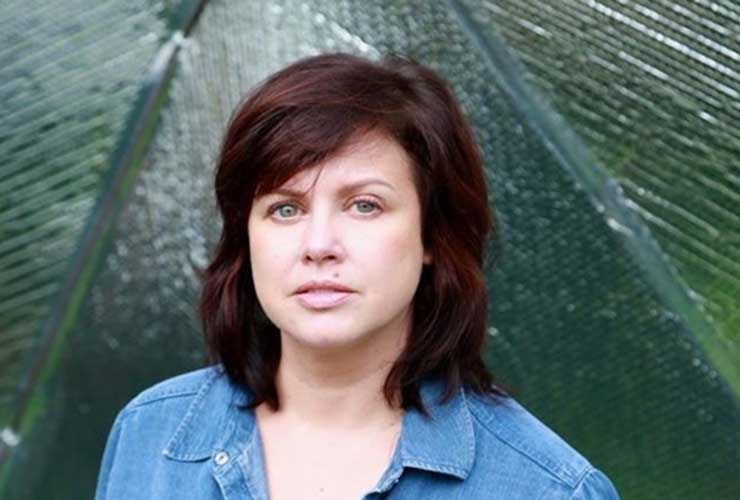
Who is Sharon Core?
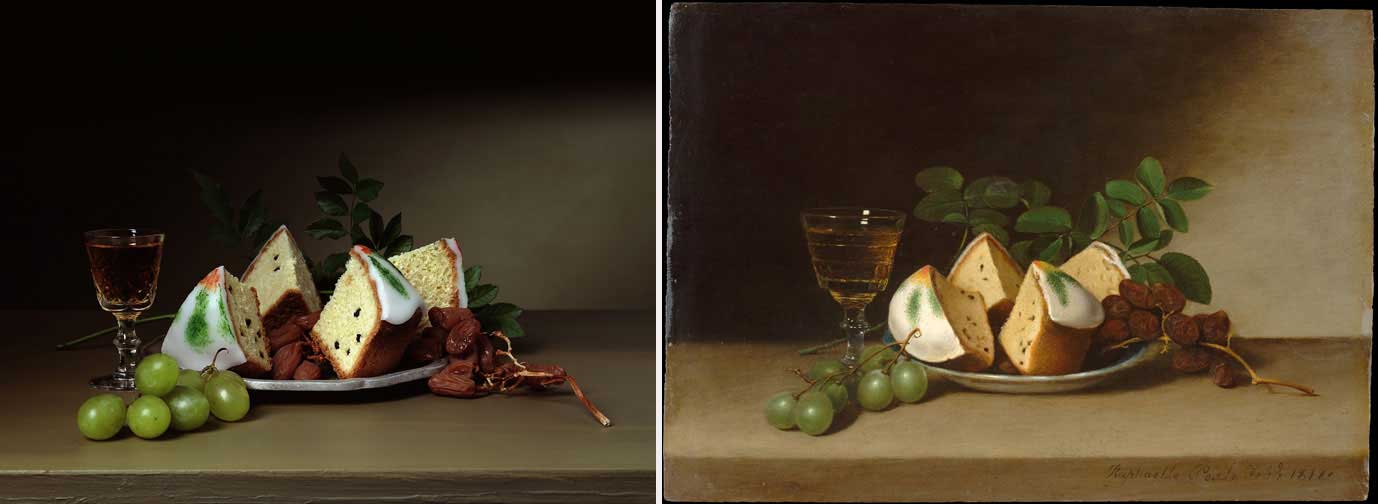
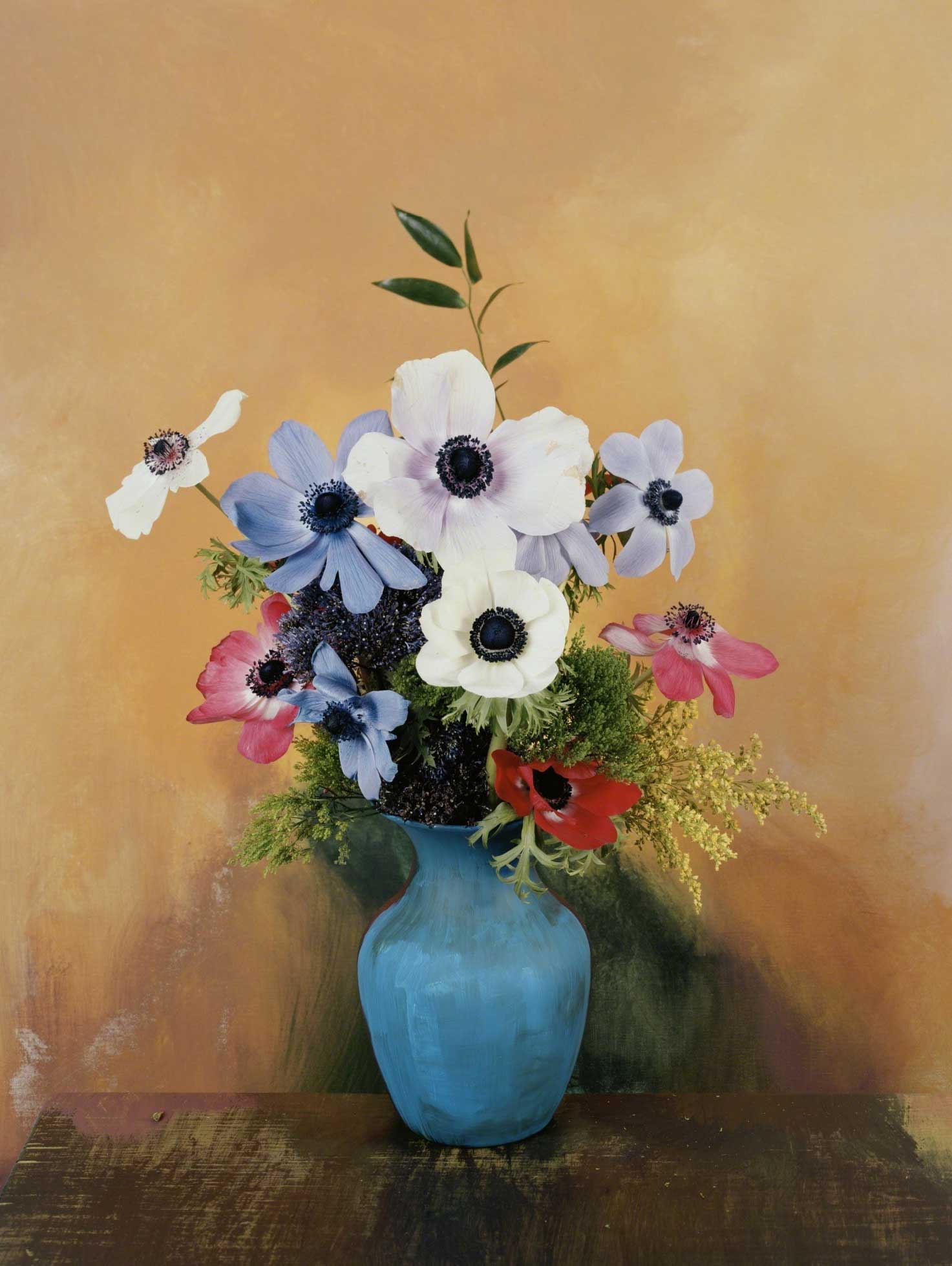
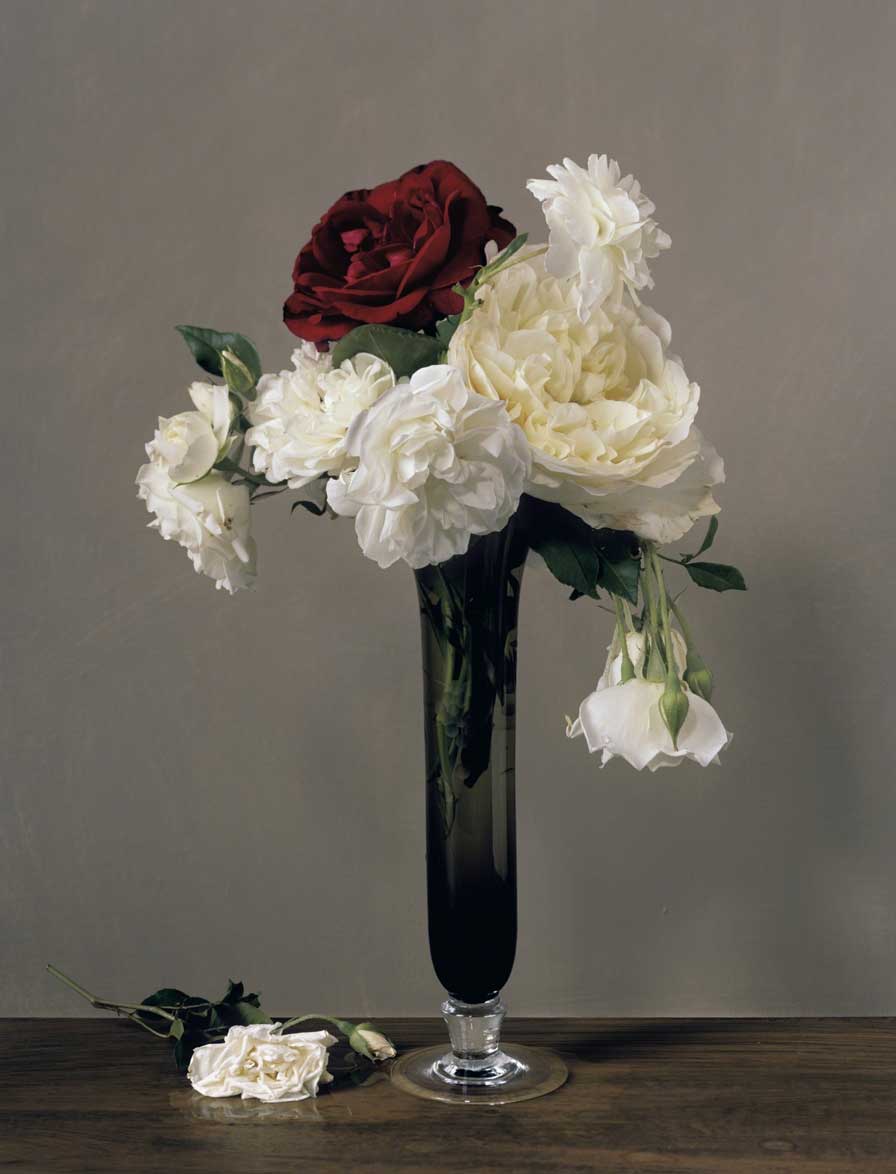
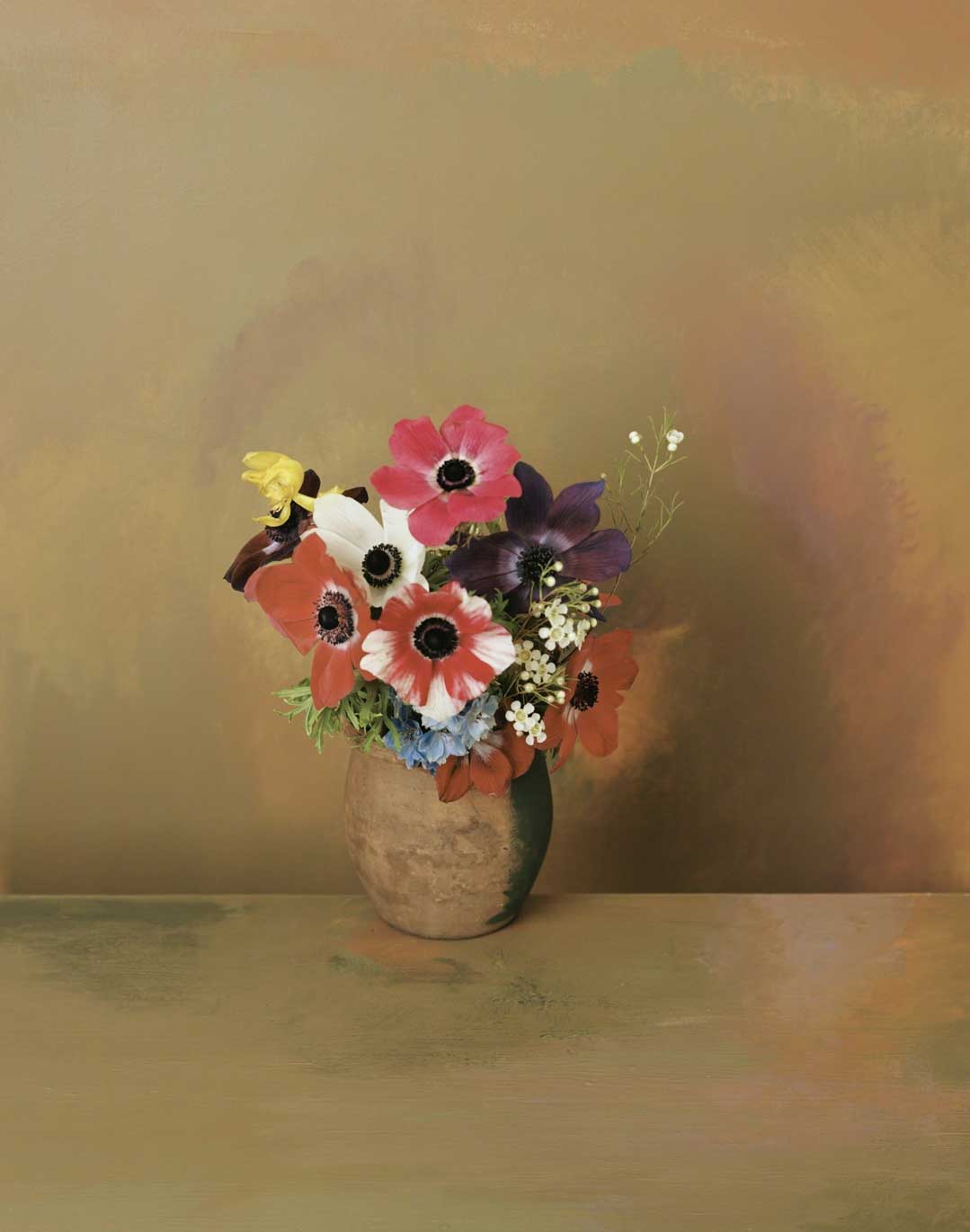
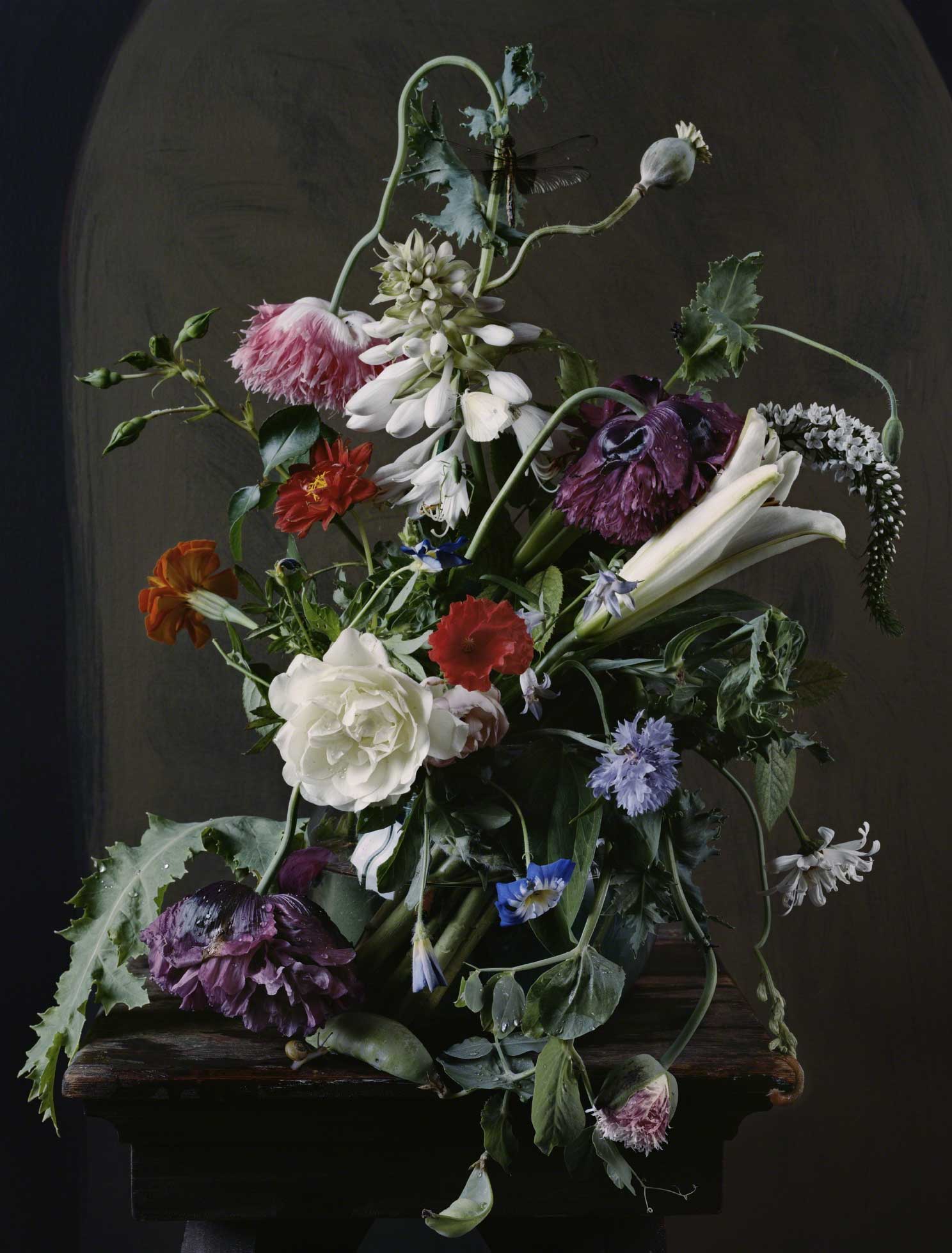
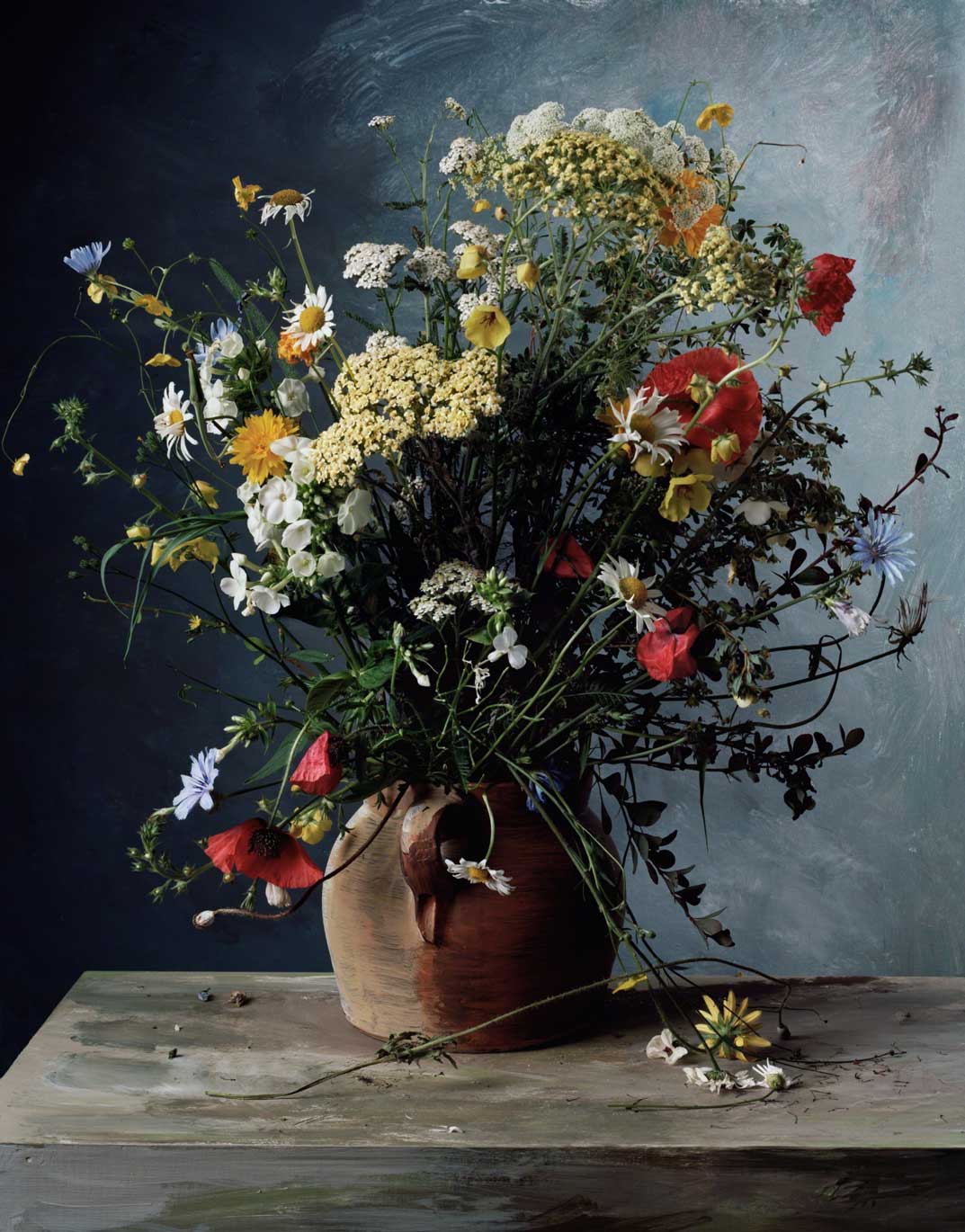
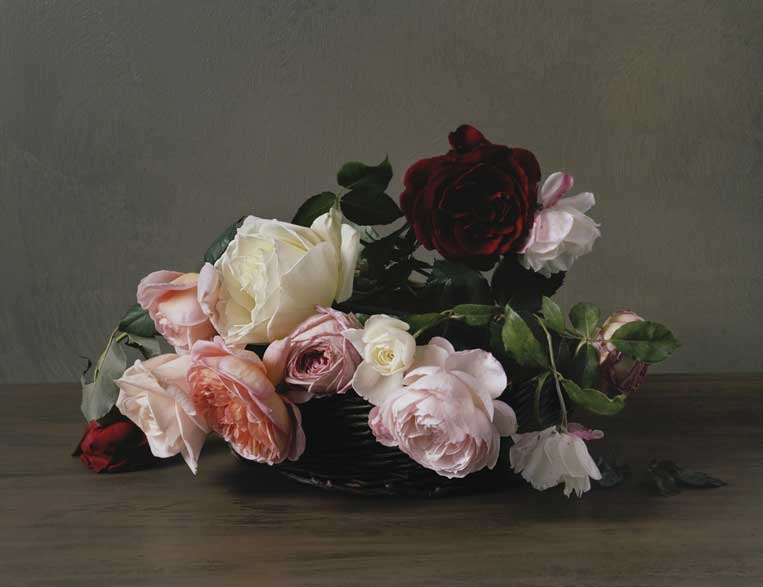
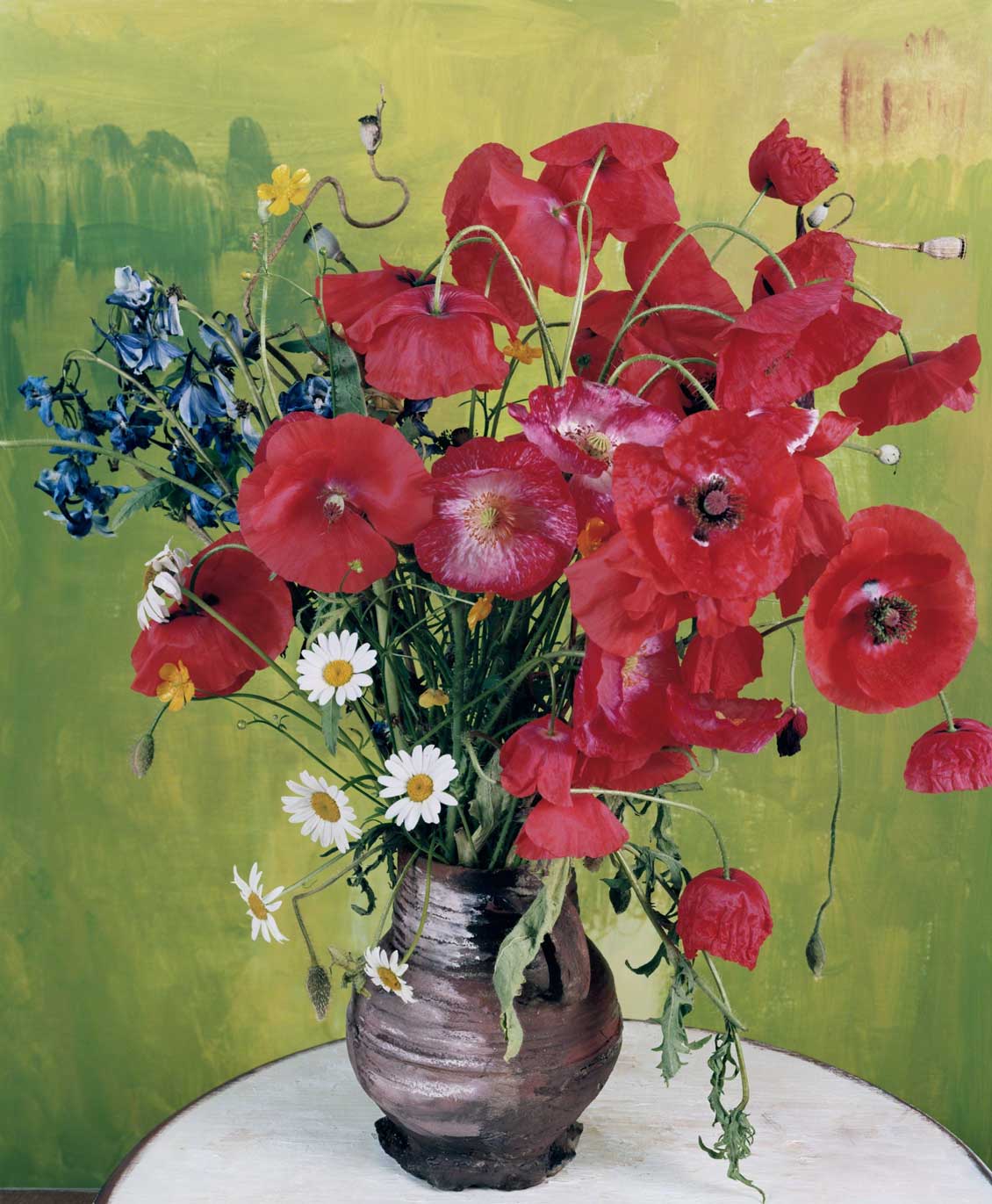
Sharon Core’s carefully constructed images examine the relationship between illusion and reality within photography. From Early American (2007-2010), painstaking photographic recreations of the still lifes of 19th-century American painter Raphaelle Peale, to her most recent series, Understory (2014-2016), inspired by the work of 17th-century Dutch painter Otto Marseus van Schriek, for which she cultivated and photographed a rich array of plant life, Core problematizes our understanding of photography as a simple truth-telling medium.
Core maintains her commitment to authenticity in the materials she photographs, creating a living studio from a large geodesic dome in which she grew the plant life featured in the photographs. Thus, her work is not entirely fictional, but can be seen instead as an extension of reality, in which the lines between the natural and artificial are blurred.
The paintings on which [my works] are modeled were painstakingly painted to appear as real as possible, so I go to great pains to come at the image from another direction—to mirror it”
Sharon Core discussing her photography process
Born in New Orleans in 1965, Sharon Core lives and works in Esopus, New York. She received her BFA in painting from the University of Georgia in 1987, and her MFA in photography from Yale University School of Art in 1998. Core was the recipient of the George Sakier Memorial Prize for Excellence in Photography at the Yale School of Art in 1998 and she won the Rema Hort Mann Foundation Art Grant in 2000.
Since 1998, her work has been exhibited in the United States and abroad, including George Eastman House, Rochester; Grand Palais, Paris; Norton Simon Museum, Pasadena; Gallery Hyundai, Seoul; White Columns, New York; James Kelly Contemporary, Santa Fe; and the Hermes Foundation Gallery, New York. Her work is included in major public collections such as The J. Paul Getty Museum, Los Angeles; Guggenheim, New York; The Zabludowicz Collection, London; Yale University Art Gallery; Princeton University Museum of Art, etc.
Q & A
Sharon Core talked to Eleni Zymaraki Tzortzi.
You have been trained as a painter and a photographer; why did you choose still life photography and not still life painting as your means of artistic expression?
It was never really a question between still-life painting or photography. When I was painting, many years ago now, I would make paintings from old family photographs. I came to photography out of a love for the moment the image is made. That fraction of a second has a delicious tension and is quite performative. Photography appealed to me in a way painting did not, because of its very real relationship to time.
The most challenging part of making a still life photography is…
Every part. Its very demanding and requires a lot of intense mental focus and scrutiny without losing the sense of wonder and discovery. Of course, one could say this about the parctice of photography in general.
Still life photography has been adopted/exploited extensively by the advertising industry.
Moreover, social media have altered the subject matter of photography towards an egocentric model and a new genre, the selfie, has emerged.
What do you believe is the place and the role of still life photography within this context today?
Photography is in a definite state of flux. I think very many photographers, myself included, are trying to make sense of the shift towards digital, the unknown future of film and film cameras, and the way photographs are perceived in the digital age and the way they are used as information. Pictures are pictures and their power comes from the poetry of form and their conceptual underpinnings. The selfie is a self-portrait by another name. Like the self-portrait, the still life has existed for millennia. Why? Because it is a rich and dynamic genre. Durer, Chardin, Picasso, Van Gogh, and more recently Wolfgang Tillmans and Thomas Demand all made/make still lifes.
Traditional still life paintings were arranged compositions that always contained hidden, deeper meanings – a symbolism. Photography has the privilege of being able to explicitly refer to these meanings capturing real life situations/conditions; so why a photographer would choose to compose an arrangement of objects in order to convey a message?
Still-life paintings were no more “arranged” and symbolic than any other genre. The still life refuses to speak. It doesn’t have a story or a hero so it is harder to discern verbally. This is its overwhelming power and appeal for me. I think in the digital age documentary photography is no longer evidence of any real situation or condition, if it ever was. Photography (as practiced by people, and not AI) involves a point of view that is inflected by light, the lens in use, the height or position of the photographer and his/her emotional state and political and philosophical views. All of photography is illusion and it always has been.
See more / content via: https://elzimaraki.gr/sharon-core-still-life-photography/?lang=en